- Get Free Shipping to Germany on orders over 57,00 €. Delivery can be as quick as 1 business day(s)!
- Subscribe our Newsletter for the freshest beauty news & tips!
- Get 30% Off on Eucerin, the Brand of the Month




 Return Policy


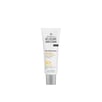
Heliocare 360 MD A-R Emulsion SPF50+ Anti-Redness 50ml offers efficient protection against sun exposure for redness-prone skin.
Heliocare 360 MD A-R Emulsion SPF50+ Anti-Redness 50ml was specially developed for prone-to redness complexions. In fact, this formula resorts to an Anti-Redness System (Physavie, Rosabora and Glutathione) to protect the skin from agents that cause redness. With a light and quickly absorbed texture, its tone-unifying complex is able to contribute to a more uniform tone, reducing the appearance of redness.
In addition, this sunscreen, it contains a potent combination of Sun filters that ensure protection against UVB, UVA, Visible Light, and IR (SPF50+, PA++++). Furthermore, this product features the new ASPA-Fernblock® technology, a blend of Fernblock® and Aspalathus linearis extracts (Diaspaline). So, this technology helps prevent and repair sun damage, enhances the efficacy of the SPF, and contributes to improving vitamin D activity in the skin.
Use Heliocare 360 MD A-R Emulsion SPF50+ Anti-Redness 50ml as part of your daily skincare routine or right before sun exposure. Apply a generous amount to the skin of your face, neck and décolleté. Reapply frequently, especially after showering, swimming or towel drying.


In this section we answer frequently asked questions about Heliocare 360 MD A-R Emulsion SPF50+ Anti-Redness 50ml
Sunscreen gets its protective power from ingredients called sun filters, which fall into two groups. "Mineral" is the common name for inorganic filters, of which there are only two: zinc oxide and titanium dioxide. "Chemical" is the common name for organic filters, which are carbon-based compounds and cover multiple different ingredients. A mineral sunscreen uses only inorganic filters, a chemical sunscreen uses only organic filters, and a sunscreen that combines both is known as a hybrid.
Both types of filters mainly protect the skin by absorbing UV radiation. Mineral filters, along with a few organic ones, also reflect a small portion of it.
SPF measures protection against UVB radiation. In the EU, the highest SPF on a cosmetic sunscreen label is SPF50+, which corresponds to the "very high protection" category and is used when the measured SPF is 60 or higher.
Some sunscreens, usually designed for specific skin conditions, are classified as medical devices rather than cosmetics, and these can show higher values, such as SPF100.
 Get Free Shipping to
  Germany on orders over 57,00 €. Delivery can be as quick as 1 business day(s)!