- Get Free Shipping to Indonesia on orders over IDR2.477.825,00. Delivery can be as quick as 3 business day(s)!
- Subscribe our Newsletter for the freshest beauty news & tips!
- Get 30% Off on Eucerin, the Brand of the Month




 Return Policy

Promotional price valid from 01/10/2026 to 31/10/2026.
Limited to existing stock.

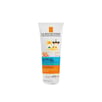
La Roche-Posay Anthelios UVMune 400 Dermo-Pediatrics Hydrating Lotion SPF50+ Sunscreen 250ml offers very high sun protection for children's sensitive skin, with a water-resistant and fragrance-free formula.
La Roche-Posay Anthelios UVMune 400 Dermo-Pediatrics Hydrating Lotion SPF50+ Sunscreen 250ml offers very high protection specifically tailored for children's sensitive skin, including atopy-prone skin. To begin with, this formula features the exclusive UVMune 400 technology. To explain, this technology features the exclusive Mexoryl 400 filter which protects against ultra-long UVA rays, considered among the most insidious for the skin. More importantly, this technology protects against all types of UVA and UVB rays, offering a broad spectrum against UVA/UVB and ultra-long UVA rays. In addition, this sunscreen is water-resistant, sweat-resistant, and sand-resistant formula making it an ideal choice for active children during outdoor play or beach days.
Moreover, the formula features vitamin E, known for its antioxidant properties, while shea butter contributes to nourishing the skin. The lotion's milk texture is easily absorbed and formulated without fragrance, being suitable for both the face and body. In summary, his sunscreen ensures children's delicate skin remains protected and hydrated.
Apply La Roche-Posay Anthelios UVMune 400 Dermo-Pediatrics Hydrating Lotion SPF50+ Sunscreen 250ml to the face and body at least 20 minutes before sun exposure. Reapply frequently, every 2 hours or after swimming, perspiring, or toweling.


In this section we answer frequently asked questions about La Roche-Posay Anthelios UVMune 400 Dermo-Pediatrics Hydrating Lotion SPF50+ Sunscreen 250ml
Sunscreen gets its protective power from ingredients called sun filters, which fall into two groups. "Mineral" is the common name for inorganic filters, of which there are only two: zinc oxide and titanium dioxide. "Chemical" is the common name for organic filters, which are carbon-based compounds and cover multiple different ingredients. A mineral sunscreen uses only inorganic filters, a chemical sunscreen uses only organic filters, and a sunscreen that combines both is known as a hybrid.
Both types of filters mainly protect the skin by absorbing UV radiation. Mineral filters, along with a few organic ones, also reflect a small portion of it.
SPF measures protection against UVB radiation. In the EU, the highest SPF on a cosmetic sunscreen label is SPF50+, which corresponds to the "very high protection" category and is used when the measured SPF is 60 or higher.
Some sunscreens, usually designed for specific skin conditions, are classified as medical devices rather than cosmetics, and these can show higher values, such as SPF100.
 Get Free Shipping to
  Indonesia on orders over IDR2.477.825,00. Delivery can be as quick as 3 business day(s)!