 Shop at caretobeauty.com — Your online beauty store


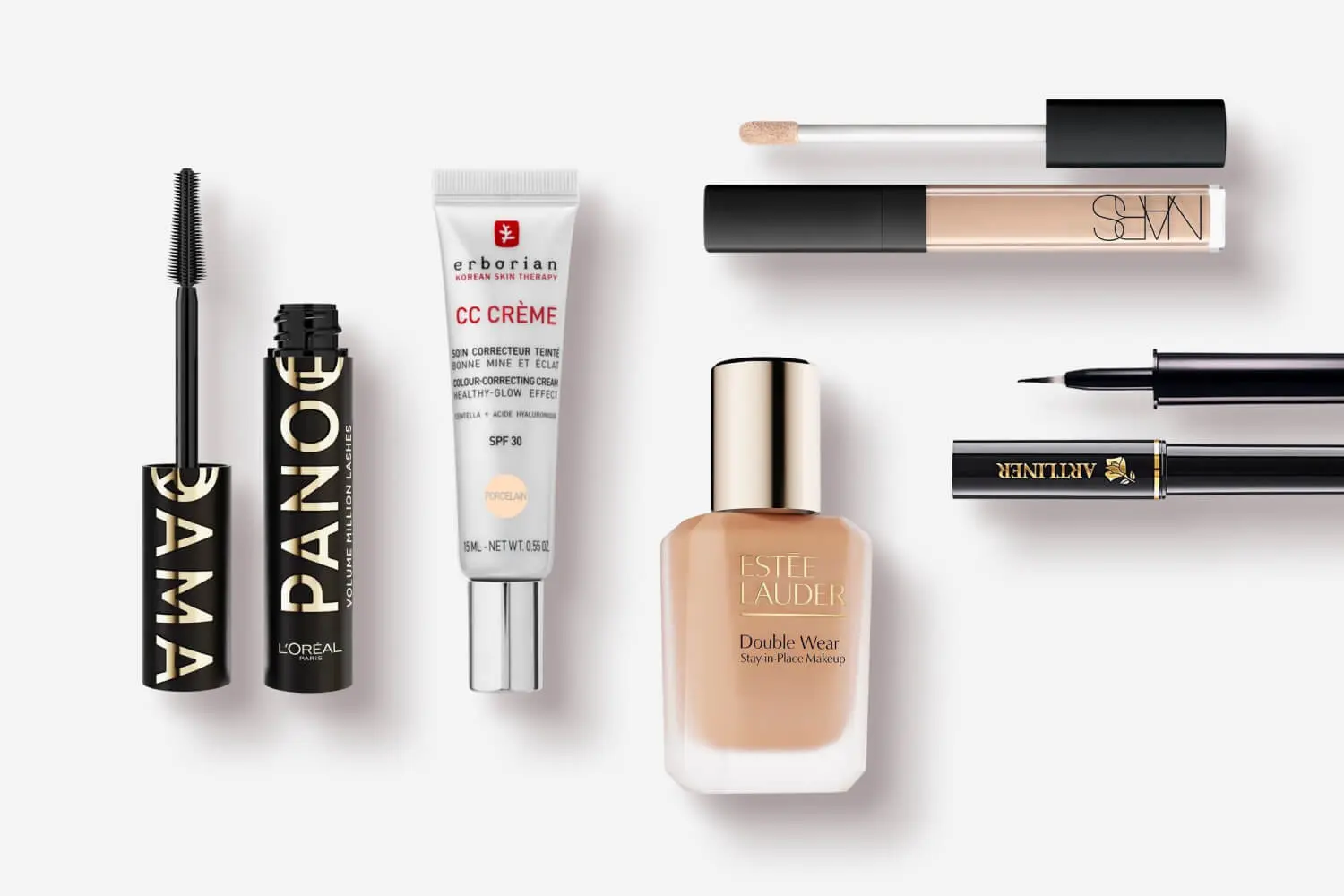

With so many makeup products, anyone trying to initiate a beauty routine or attempting to decide what they really need for their makeup kit can easily be overwhelmed. There are new formulas being released all the time, not only in product categories you already know, but also in entirely new product categories that haven't been invented yet. In this post, we're assembling a comprehensive list of all the makeup products we know about. We're including all the products, but we're doing our best to simplify it without compromising on detail! After all, a serum foundation is a foundation, and not an entirely new product category. With this list, you may find new product categories you haven't tried yet and make your beauty kit more complete.
Face
Let's start with complexion makeup! This category makes a substantial part of the complete list. We believe that you may already be familiar with some of the subcategories, but we hope we can surprise you with makeup products you didn't know about.
Primer

You may rely on your regular moisturizer or sunscreen to be the skin prep step that welcomes your makeup. That approach has been working since forever, and there's no obligation in adding the step we're about to detail. The makeup primer works as a makeup "optimizer", improving your complexion makeup performance in many ways. Different primers allow you to achieve different results: you'll find formulas that grant an oil-control effect, while others boost the glow of your beauty products. We can sum it up by saying that the primer helps you achieve the beauty result your makeup alone is not able to, while extending the longevity of your look.
Foundation

The foundation is a makeup step that is a priority for many makeup lovers. Its main job is to perfect the complexion, but many makeup users like to count on the foundation to add a bronzed, golden glow to the complexion. Within this product group, you'll find the classic formulations, offering from sheer to full coverage, and other new takes on this product type. The serum-foundation, for example, combines skincare ingredients and pigments to deliver the perfecting skin result you expect from a foundation, but with added benefits. Having said that, these are a matter of either-or; for most people, it doesn't make sense to consider layering these.
BB & CC cream

It may also be a complexion product, comparable to the foundation, but the BB and CC creams deserve a section of their own. This is what you need if your desired result is a super natural complexion with an effortless application process. Less high maintenance when compared with foundations, the BB and CC creams are easy to apply and appeal to those who are not used to applying foundation but want a little something to make the skin look its best version. Usually combining skin benefits, with some kind of sun protection, and the perfecting result of the pigments, the BB and CC creams are the solution if you want a natural-looking product to even out your complexion.
Concealer & corrector

We're combining concealers and correctors in the same family, as they have a similar job: to deliver high coverage where needed. The difference would be that correctors are extremely full coverage, usually in a thick cream or stick presentation, and may come in natural skin shades or correction shades like orange, green, or yellow to adjust the undertone of your foundation or to cancel discoloration areas. Known to deliver high coverage where you need it, the concealer is the product that helps to camouflage dark circles around the eyes as well as any other skin imperfection that doesn't shy away from the foundation.
Setting powder

Powders may be loose or compact, pigmented or translucent. You may use them to add some coverage to your complexion makeup, or use them exclusively to set the liquid and creamy complexion products. The setting powder erases excess shine, creating a velvety finish on your complexion makeup. You should include it in your beauty kit if you're not happy with the lasting power of your makeup or if there's too much shine on your skin after applying foundation and concealer.
Blush

The blusher can be a cream, a stick, a liquid, or the classic compact powder like the example we suggest. Regardless of the presentation, the goal is the same: to add some lively color to the cheeks! You should use this kind of product if you feel that your skin lacks some vibrant color, a natural flush that makes your complexion look radiant and healthy. It is especially useful when you use a foundation, as it evens out all the natural flushing colors of your face. In fact, if you don't like how your skin looks with foundation... that may be why, and you should definitely give blush a go.
Contour

Often confused with its twin brother, the bronzer, contour is a powder or a cream with an ashy color that creates natural shades on your complexion to define and sculpt your features. You should use it to sculpt your nose, your cheekbones or even your eyes! There's one key tip you need to know before going in: for this kind of product, you want to use the tiniest amount; if you apply too much, the complexion looks muddy and ashy.
Bronzer

Famous among those who love a tanned look, bronzer adds warmth and depth to your complexion makeup. You can use it as generously as you like, across the cheeks, temples, even on the bridge of the nose to add a sunkissed effect to your makeup. Available in powder, stick, cream, and liquid textures, the bronzer works along with the blush and contour to sculpt your face and add color back after evening the skin out with foundation.
Highlighter

The highlighter is a makeup product that can come as a powder, a cream, a stick, or a liquid, and tops up your makeup looks with glowy particles. They are easy to use and beginner-friendly, adding a subtle effect that truly enhances any makeup look. You should consider this step if you feel that your makeup looks dull and too matte. With this makeup step, you should go with a small amount and build if you feel you need more! Depending on the light you do your makeup under, the result might not be immediately visible and you may overdo it without even noticing... until you're under the harsh sunlight.
Setting Spray & fixing spray

You shouldn't be surprised if we tell you that this makeup step always comes in a spray! We combine two variations of the same step here: the setting and the fixing spray! Both are used to coat your makeup look with a layer that extends the longevity of the makeup. But there are a few differences: the setting spray is in a pump spray, feels like water on your skin and blends with the makeup. The fixing spray, however, comes in an aerosol and coats your makeup with a protective film and works even better to extend the longevity of your makeup. When it comes to the sensation on your skin, we can compare it like this: the setting spray feels like thermal water, and the fixing spray feels like hairspray for the face.
Eyes
Now that the complexion makeup is detailed, it's time to move to the eye makeup. Even if we're not surprising you with a new makeup product for the eyes, you may discover a new presentation for a product that you have always used.
Eyeshadow primer

The eye primer may not be a step for everyone, but it is especially useful for those who like to use powder eyeshadow but feel that it doesn't last more than a couple of hours before creasing and losing intensity. It's worth it to add to your kit if you want your powder eyeshadow to last until you decide to rinse it off, and also if you'd like your eyeshadow color and shimmer to be as intense as possible.
Eyeshadow

It wouldn't be on character for this writer to delve into eyeshadows without featuring the versatile stick version! When you think about eyeshadow, what probably comes to mind is the classic powder compact. But eyeshadows can come in all sorts of presentations: the mono compact powder, mono loose powder, compact powder palette, cream, stick, liquid... and we may be forgetting something. This may not be an essential makeup step, but it's the one you need if you want to bring attention to your eyes and frame them with color or depth.
Eye pencil

The eye pencil is intuitive to use and one of the easiest ways of defining the eyes. You may find two main options: the retractable or a sharpening pencil. To sum it up, we can say that your basic eye pencil, usually presented as kajal or khols, can be used on the waterline but may not offer very lasting results. On the other hand, pencils that present as "gel-liner" or "waterproof" are usually more pigmented, smoother upon application and offer extra long-wear.
Eyeliner & eye pencil

You may notice a significant difference in the results between the pencils and the liquid eyeliners. Liquid eyeliners are more intense, ultra-pigmented, and offer a graphic result that requires a steady hand upon application. Have all these differences in mind before making your choice! We can't talk about eyeliner without showing you a cult formula. Eyeliners can be like the one from the example, with a soft and flexible felt-tip applicator, or they can come in a pen, a thin precision brush, or a gel in a pot. Last but not least, the liquid and cream versions are usually extremely long-wearing and waterproof.
Mascara

This is the step that can transform your lash look. The mascara always comes in a tube (at least, all the options we know!), and what may differ is the type of brush and promised result. Some brushes are more precise, while others are big and voluminous. The mascaras can be designed to deliver a defined result to your lashes, or even a volumizing and lengthening effect. Some formulas even give it all! You should choose yours considering your beauty preferences as well as your lash natural features.
Eyebrow pencil & gel

Applying makeup to the brows creates a huge yet subtle transformation of the makeup. You may opt for the classic sharpenable pencil, or go for the extra-thin retractable options, or even try the gel pomades and brow gel "mascaras". There is a world of presentations for the brow makeup; the list of options is so big that we even have a blog post entirely dedicated to that! To help you choose, you only need to decide whether you need to fill in bald spaces, or if you only need to comb and set them (you may like to combine both). If you need to fill, then a pencil or any other tinted powder or gel is the way to go. For setting and combing them, then a brow gel, tinted or not, is what you need.
Lips
The lip makeup category has been expanding and includes an infinitude of variations in sub-categories that used to be straightforward. Below, we detail all you need to know.
Lip liner

Adding more definition and intensity to your lip makeup is easy with a lip liner. Whether it is a sharpenable pencil or a retractable one, the sharpness of the pencil gives you the precision to contour your lips, with pigmentation that really enhances the final result while extending color longevity. In short, you need this step in your beauty kit if you would like your lip color to be richer, if you feel the need to draw the lip contours with more precision than the lipstick allows, or if you want to create a color gradient with your lipstick. Speaking of which... what's a lipstick?
Lipstick

A lipstick is the makeup product everyone knows. What we may clarify for you is how many presentations it can arrive to your hands. You can have your classic bullet lipstick, or you can try a liquid lipstick, a powder lipstick, a lipstick crayon, and any other unique presentation, like blush & lip in a stick. They can range from sheer color to intensely pigmented, and you really need to try the different finishes, from glowy to ultra matte, to understand which one suits your preference and style.
Lip gloss

The lip gloss category used to be as simple as makeup can be. In the last few years, however, the group has been including new and exciting variations that deliver the gloss effect along with slightly different features. You may have heard about the lip oils, lip tints, lip stains,... most of them creating a makeup result comparable to your classic gloss.
