- Get Free Shipping to Serbia on orders over 8.914,00 RSD. Delivery can be as quick as 1 business day(s)!
- Subscribe our Newsletter for the freshest beauty news & tips!
- Get 30% Off on Eucerin, the Brand of the Month




 Return Policy


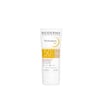
Bioderma Photoderm AR Anti-Redness Cream SPF50+ Natural 30ml strongly protects rosacea-prone skin while evening out its tone, calming and smoothing it.
Bioderma Photoderm AR Anti-Redness Cream SPF50+ Natural 30ml offers strong sun protection, particularly for reddened, sensitive and rosacea-prone skin. Basically, this sunscreen not only protects the skin and acts on the redness of the skin, but also evens out the tone of the complexion through the presence of light color pigments. In turn, this non-comedogenic creamy texture is quickly absorbed by the skin, also having excellent skin and eye resistance.
It is normal for skin that already suffers from rosacea and redness to worsen with solar radiation. In this sense, it is important to limit the evolution of redness through strong UVA-UVB protection. That said, this sunscreen, enriched with the Rosactiv™ Complex, enriched with Ginkgo Biloba, Green Tea, and Soy Extracts, has high anti-inflammatory and antioxidant concentrations. In turn, these help to reduce redness and keep it from appearing, not only comforting and soothing the skin but also protecting it from oxidative stress. Furthermore, Enoxolone, with anti-inflammatory and soothing properties, helps to reduce symptoms of discomfort by calming irritation and rashes. Finally, D.A.F patent increases the tolerance threshold of the skin in order to strengthen its resistance. In this way, the skin is not only more protected from the inside, but also more soothed, uniformed and smooth.
Apply Bioderma Photoderm AR Anti-Redness Cream SPF50+ Natural 30ml to the face evenly and in generous doses in the morning or 30 minutes before sun exposure. Reapply frequently in order to maintain high levels of protection. Avoid sun exposure at noon or for many hours.


In this section we answer frequently asked questions about Bioderma Photoderm AR Anti-Redness Cream SPF50+ Natural 30ml
Sunscreen gets its protective power from ingredients called sun filters, which fall into two groups. "Mineral" is the common name for inorganic filters, of which there are only two: zinc oxide and titanium dioxide. "Chemical" is the common name for organic filters, which are carbon-based compounds and cover multiple different ingredients. A mineral sunscreen uses only inorganic filters, a chemical sunscreen uses only organic filters, and a sunscreen that combines both is known as a hybrid.
Both types of filters mainly protect the skin by absorbing UV radiation. Mineral filters, along with a few organic ones, also reflect a small portion of it.
SPF measures protection against UVB radiation. In the EU, the highest SPF on a cosmetic sunscreen label is SPF50+, which corresponds to the "very high protection" category and is used when the measured SPF is 60 or higher.
Some sunscreens, usually designed for specific skin conditions, are classified as medical devices rather than cosmetics, and these can show higher values, such as SPF100.
 Get Free Shipping to
  Serbia on orders over 8.914,00 RSD. Delivery can be as quick as 1 business day(s)!