Promotional price valid from 15/10/2026 to 31/10/2026.
Limited to existing stock.
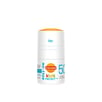
Carroten Kids Protect Plus Roll-On SPF50+ 50ml is a roll-on sunscreen for children that offers broad-spectrum defense with easy, mess-free application.
Carroten Kids Protect Plus Roll-On SPF50+ 50ml is a roll-on sunscreen designed for children over the age of 3. It includes the 4D Protection System, offering broad-spectrum defense against UVB and UVA rays, with an SPF of 50+. Additionally, it also offers protection against infrared radiation and visible light, helping to prevent sun-induced skin damage. A moisturizing complex featuring allantoin, glycerin, panthenol, and betaine hydrates the skin, providing a protective barrier against dryness.
Furthermore, the roll-on applicator offers targeted, hands-free application, making it especially convenient for use on-the-go or for quick touch-ups. In other words, its compact and mess-free design allows parents to apply the product with precision, particularly on smaller areas like the face, neck, and shoulders. Last but not least, the formula is very water resistant.
Apply an appropriate amount of Carroten Kids Protect Plus Roll-On SPF50+ 50ml to the skin of the desired areas. Avoid applying around the eye area. Reapply every 2 hours and after swimming, perspiring, or towel-drying.
In this section we answer frequently asked questions about Carroten Kids Protect Plus Roll-On SPF50+ 50ml
Sunscreen gets its protective power from ingredients called sun filters, which fall into two groups. "Mineral" is the common name for inorganic filters, of which there are only two: zinc oxide and titanium dioxide. "Chemical" is the common name for organic filters, which are carbon-based compounds and cover multiple different ingredients. A mineral sunscreen uses only inorganic filters, a chemical sunscreen uses only organic filters, and a sunscreen that combines both is known as a hybrid.
Both types of filters mainly protect the skin by absorbing UV radiation. Mineral filters, along with a few organic ones, also reflect a small portion of it.
SPF measures protection against UVB radiation. In the EU, the highest SPF on a cosmetic sunscreen label is SPF50+, which corresponds to the "very high protection" category and is used when the measured SPF is 60 or higher.
Some sunscreens, usually designed for specific skin conditions, are classified as medical devices rather than cosmetics, and these can show higher values, such as SPF100.